
The Desert locust and preventive control
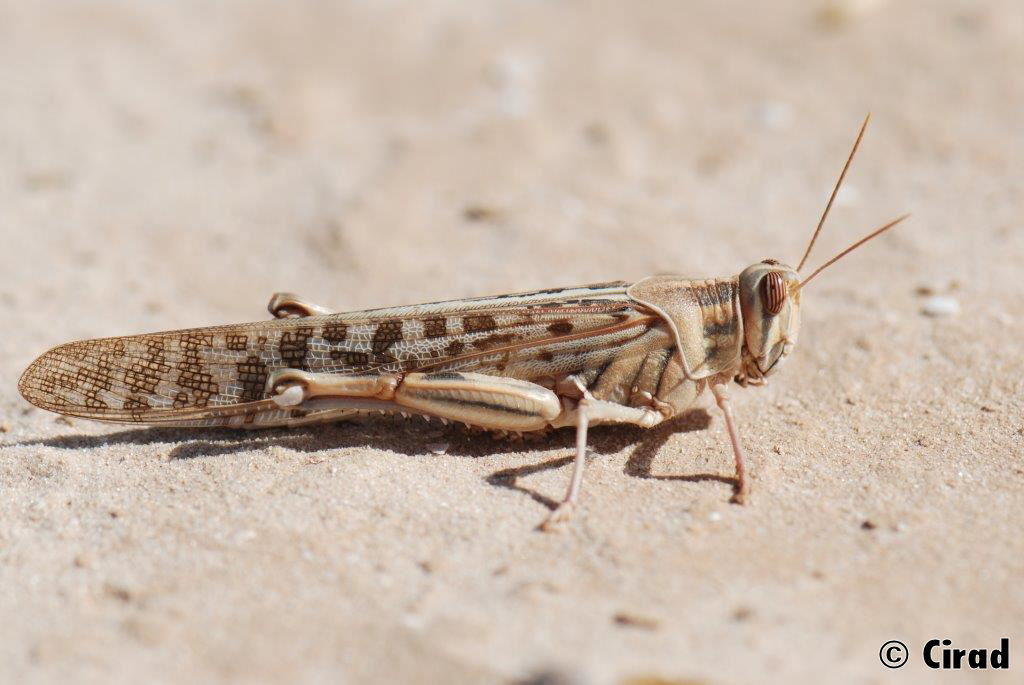 The Desert locust is able to change from a solitary life when population density is low to a gregarious life when population density is high. This density-related propensity to change behavior, life history, morphology, physiology and coloration is termed phase-polyphenism. The major driver of this phase transformation is population growth and concentration in vegetated areas in deserts. Sporadic and localized rains cause vegetation growth and allow these population increase through egg deposition in wet sandy soil and good survival in the developing vegetation. The new vegetation provides food for the newly hatched locusts and provides them with shelter as they develop into winged adults.
Desert locust preventive control aims to prevent crop damage by controlling populations before they can reach high densities, go through phase change and form mass migrating swarms. The areas of potential gregarization for Desert locust are huge (at least 0.25 million km²) and need to be physically assessed by survey teams for efficient preventative management. An ongoing challenge is to be able to guide where prospection surveys should occur depending on local meteorological and vegetation conditions.
Preventive control relies on the detection of Desert Locust population outbreak or early upsurge stages before their population can expand into full-scale plagues. To achieve early detection, survey teams from each country must visit potential breeding areas to assess the condition of habitat and the state of any Desert locust population. The potential breeding habitats cover enormous areas that are often remote and difficult of access. To direct survey teams precisely to those areas with highest probability for Desert locust breeding, satellite imagery represents an invaluable tool because it has the potential to provide an indication of the evolution of vegetation cover and soil moisture which are the two main parameters for describing Desert locust habitat.
Innovation
The innovative elements of the SMELLS project come from:
- the novelty of the Earth Observation product and innovating algorithmic approach to derive high resolution soil moisture from Sentinel -1,
- the original field of Earth Observation application through the introduction of soil moisture in the monitoring and early warning of Desert locust preventive control.